Espace Michel Lizée
LEGACY | RRFS-GCF
Understanding Michel Lizée’s legacy with the RRFS-GCF
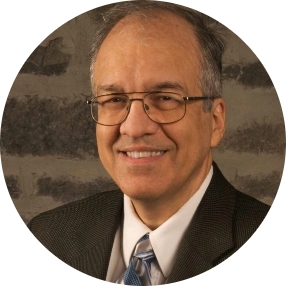
The adventure began after a meeting where the issue of working conditions in community organizations was raised. Michel said to me: “You should take care of retirement for community sector employees, because if nothing is done they’ll be facing poverty. After spending a lifetime working to improve the quality of life of others, they will find themselves, at 65, living below the poverty line.” This sparked a lively discussion about the feasibility of such an initiative. From my point of view, it was obvious that this was a waste of time: pension plans are good for large companies and for the public and parapublic sectors. Community workers struggle to maintain their modest-paying jobs; they are far from worrying about retirement. Nevertheless, the lack of benefits, particularly retirement benefits, has two consequences: employees have no income security and head toward a poor retirement, and employers lack the means of attracting and retaining workers. As a result, competent and motivated people seek to move to the public and parapublic sectors to gain a minimum of security, even if the work there is perceived as less inspiring.
An opportunity emerged with the Government Policy on Community Action, which aimed “to support the community sector in initiatives to explore organizations’ interest in group insurance plans or a pension plan” (Government of Quebec, 2001, p. 35). Relais-Femmes and the Centre de formation populaire (CFP) seized this opportunity to launch a process of reflection. The UQAM’s Community Services department (SAC-UQAM) then agreed to free up some of Michel Lizée’s time so he could support us. The working group, made up of about fifteen people from various components of the community sector, were able to benefit from Michel’s great expertise in pension plans, as well as his teaching skills. With skill, patience, rigour, and commitment, Michel helped us design a plan adapted to our sector. Question by question, he guided us in defining a sustainable pension plan based on our reality.
First, he demonstrated that public pension plans are not sufficient to ensure adequate retirement income as they keep people below the poverty line. After the shock of this realization, Michel supported us in analyzing the situation and in searching for solutions adapted to the community sector. He guided us by addressing one aspect at a time regarding what a pension plan tailored to the reality of community and women’s groups could be. For example, Michel explained to the working group the different types of pension plans: defined contribution/defined benefit, group RRSPs/simplified pension plans, RRSPs/pension plans, traditional pension plans/salary-funded pension plans… Armed with this information and after generously answering countless questions, he guided the group in identifying the type of plan best suited to the community sector. Following these discussions, Michel drafted a text reflecting the group’s wishes. This text served as a proposal for the next meeting for validation by the members. Little by little and after several months of work, our reflections led us to choose a salary-funded pension plan as being the plan best suited to our sector.
But Michel’s contribution did not stop there! His commitment continued through to seeing this major project come to fruition, and the workload was enormous: translating our ideas into formal plan documents, drafting the funding and investment policy to reflect our values while ensuring the financial strength and sustainability of our plan, making political representations to ensure that the legislative and administrative framework would not be an obstacle, meeting with groups to present our project, seeking letters of intent to join, commissioning a stochastic study to ensure the solidity of our proposal, finding actuaries and managers, and much more. After four years of work, the Régime de retraite des groupes communautaires et de femmes (RRFS-GCF) officially launched on October 1, 2008.
Through all those years, Michel directly or indirectly educated thousands of people on retirement issues, because for him (and for us), it was essential that everyone understand the Canadian and Quebec retirement funding system and, above all, the inadequacy of public plans to ensure a poverty-free retirement.
Michel could have left with a sense of having fulfilled his duty and enjoyed his retirement from the UQAM. Instead, he chose otherwise. He maintained his commitment as an independent member of the pension committee, allowing committee members to benefit from his immense knowledge of pension plans and investments, which he made accessible through his remarkable ability to simplify and teach. He also intensified his efforts to improve retirement living conditions for as many people as possible. It was in this spirit that he became actively involved in the fight to improve public pension plans. In full alignment with the values of our sector, our plan joined Michel in this struggle. His commitment to improving retirement conditions never wavered. In November 2020, weakened by illness, he was still trying to make legislators understand the importance of allowing our plan to retain orphaned retirees rather than transfer them elsewhere, for their financial security. Protecting the rights of orphaned retirees was his final battle.
On January 8, 2021, I received Michel’s resignation letter as an independent member of the RRFS-GCF pension committee, just a few weeks before his death. Even though we had known for a long time that he was ill, his departure was a blow. A few hours before learning of his passing, the pension committee had decided to create a special advisor position for him so that, if his health allowed, he could legitimately return.
Michel was exceptional in another way as well: he prepared for his departure. He was aware of the crucial role he played within our plan and of his fragile health. He himself spoke about the importance of planning one’s departure. He listed his tasks and functions within the plan, which allowed us to identify who could take them on and the costs associated with replacing him. This work was made easier thanks to Michel’s openness and honesty.
We were able to grieve without panicking about the future. He was remarkable in his work and commitment, even in the way he left us. We had the chance and great privilege of working with Michel Lizée. Now we are the orphans, but his legacy has made us rich.
On behalf of the pension committee members, the secretariat team, and also the retired and future retirees of our plan, thank you, Michel.
Credit :
Lise Gervais, Chair of the RRFS-GCF Pension Committee
Updated version of the text published on March 15, 2021
Retirement Observatory website: observatoireretraite.ca
Michel Lizée – In His Own Words